









Sliding Glass Closet Doors: How to Choose the Right Style, Size & Finish
Glass, mirrored, wood, or a custom combination — the closet doors you pick change how open, bright, and modern a room feels. This guide walks you through every option, how to measure, what drives cost, and how KNR builds custom doors in Los Angeles in about 14 days.















Closet doors are one of the highest-impact upgrades in a home renovation and one of the most overlooked. The right sliding closet doors reclaim floor space that swinging doors waste, pull natural light deeper into a room, and set the tone for a whole interior. The wrong ones jam on the track, date the space, or fight the style of everything around them.
This guide is built to help you decide with confidence. We compare the main styles of sliding closet doors, show you how to measure your opening correctly the first time, break down what actually drives the price, and explain how a custom, locally manufactured door differs from an off-the-shelf big-box panel. Whether you're outfitting a single bedroom reach-in or reworking closets throughout a home, you'll leave knowing exactly what to ask for.
Types of Sliding Closet Doors
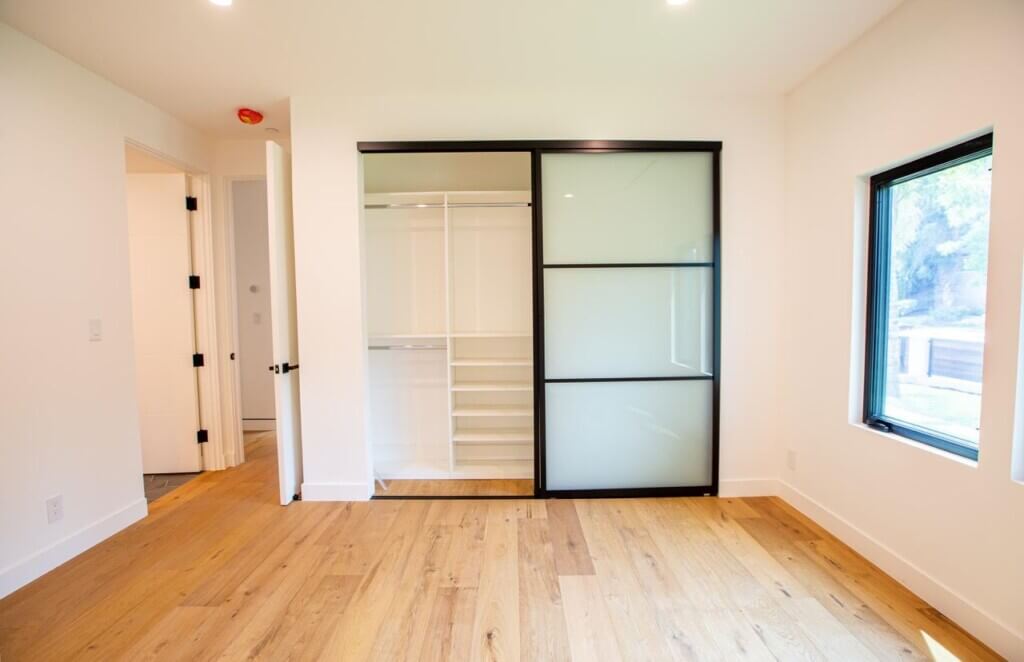
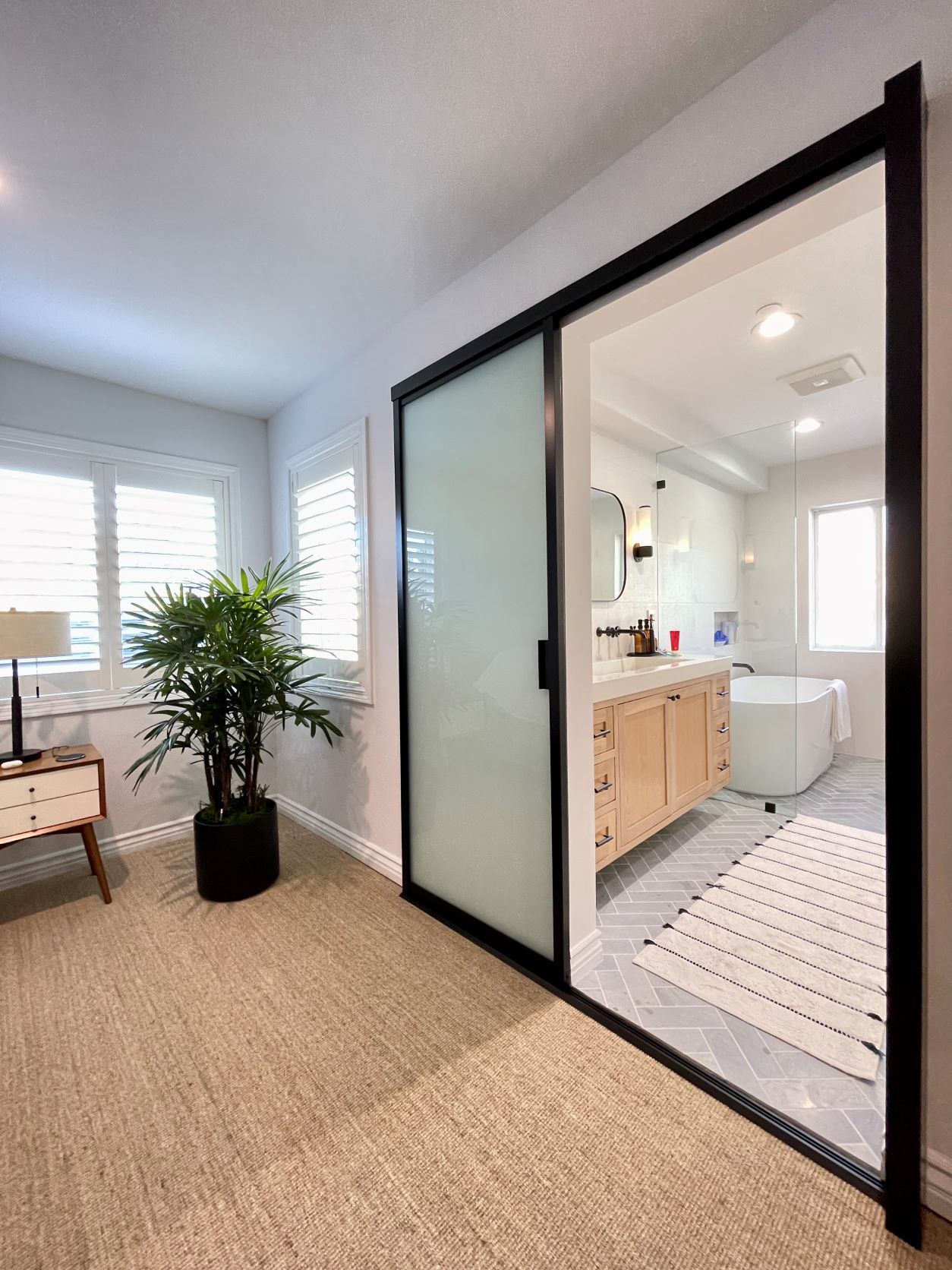
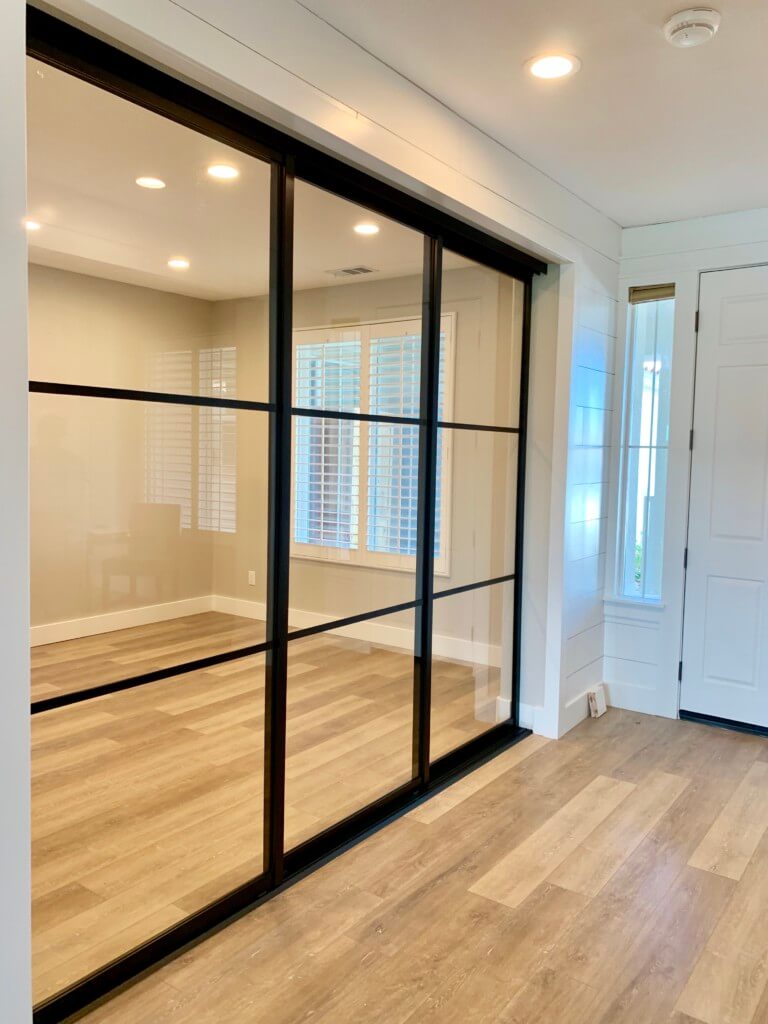
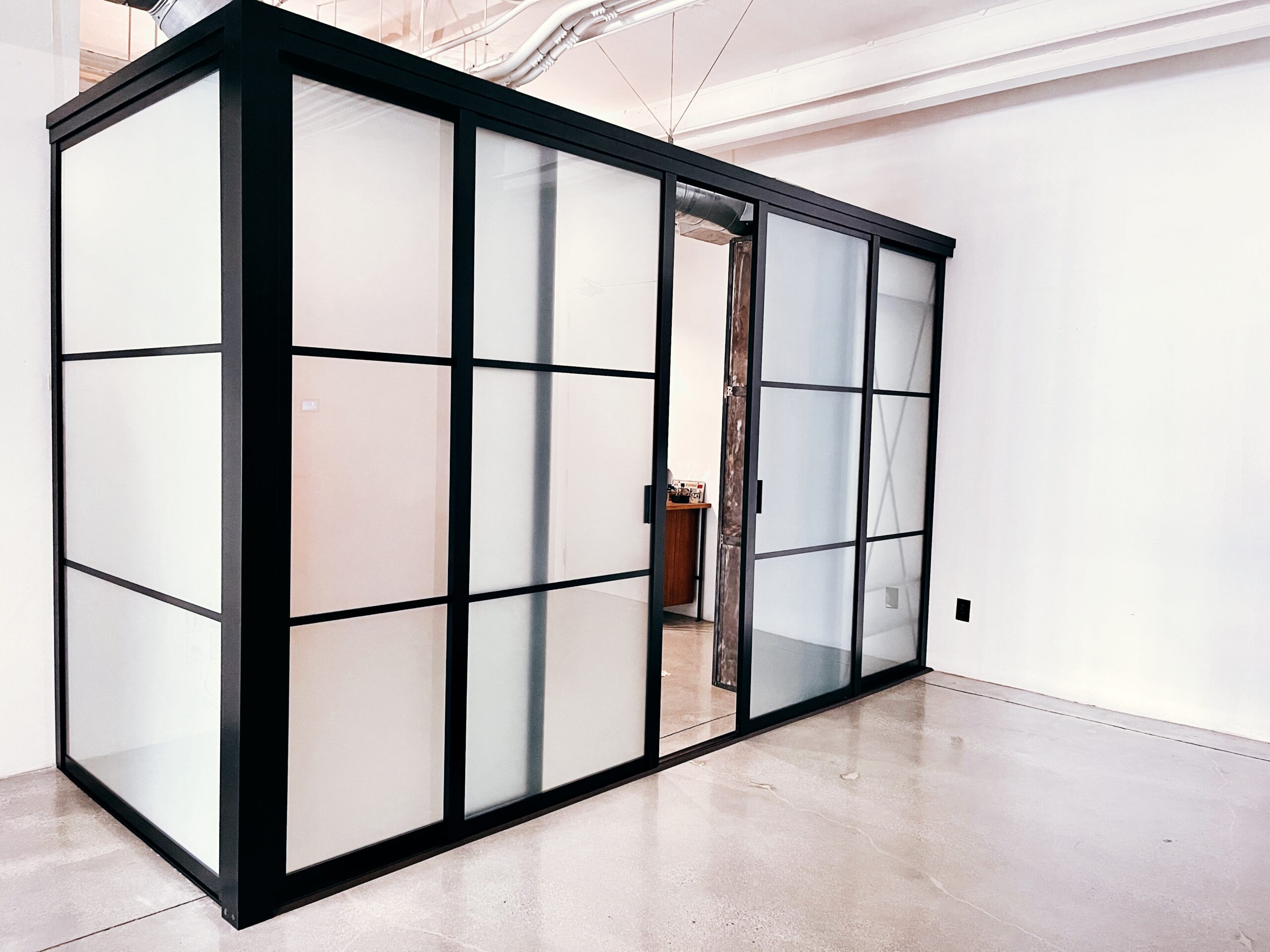
Most closet doors fall into a few families — and they can be combined. Here's how to tell them apart, shown in real KNR installations.
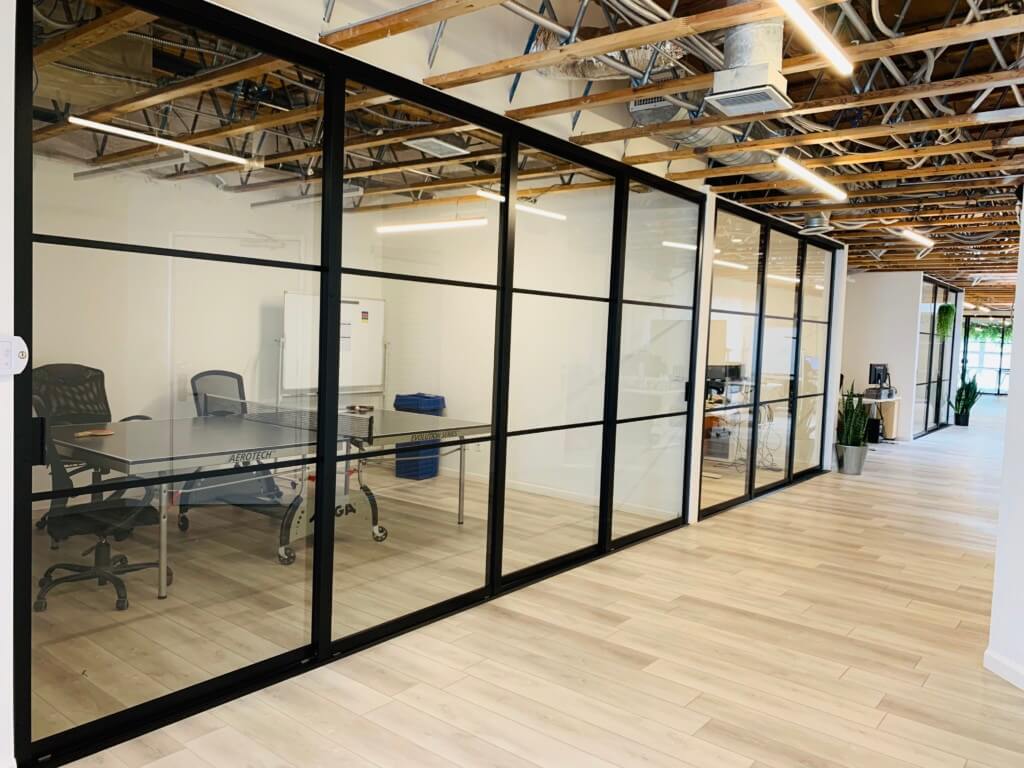
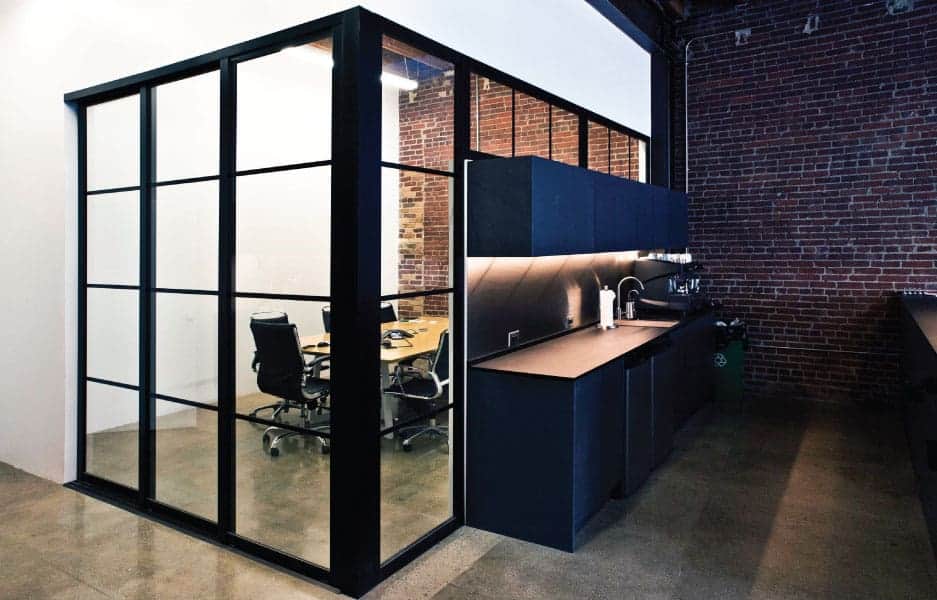
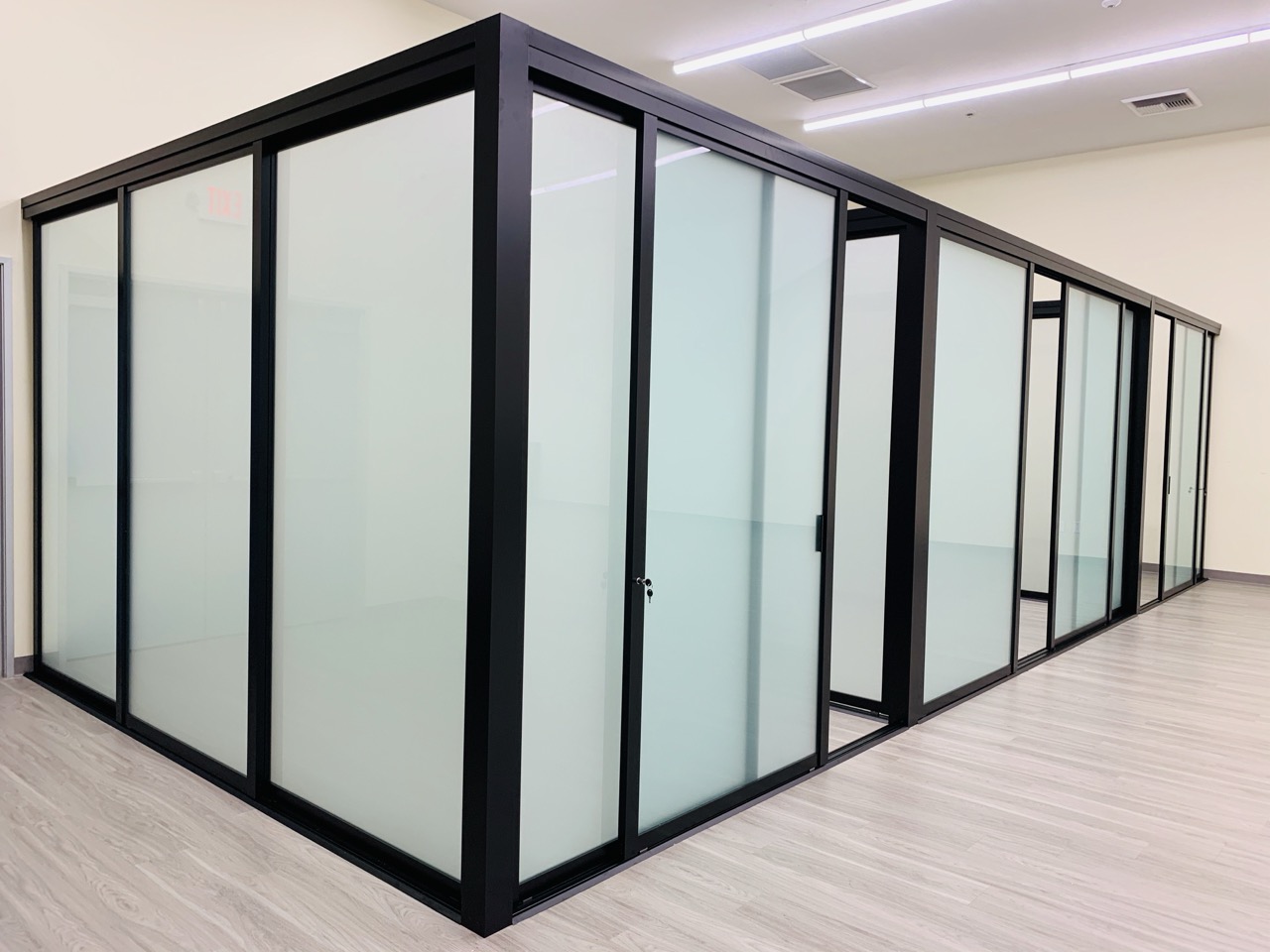
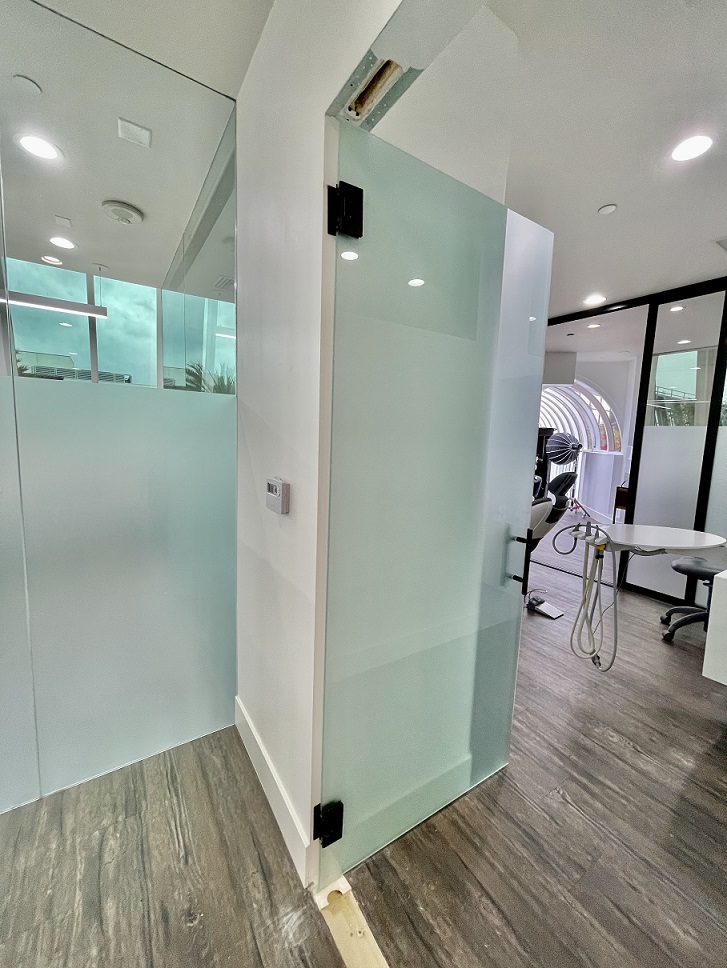
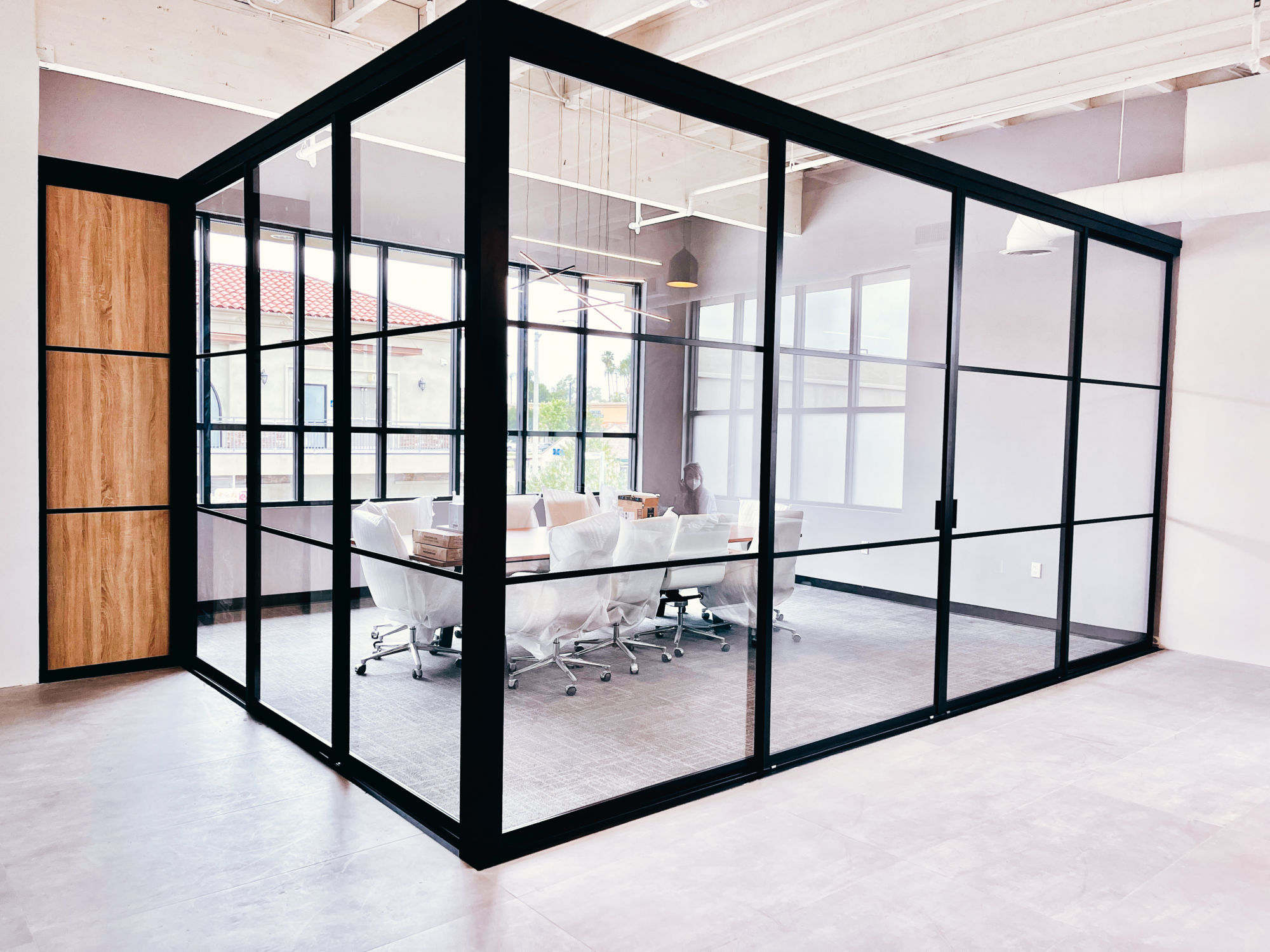
Glass
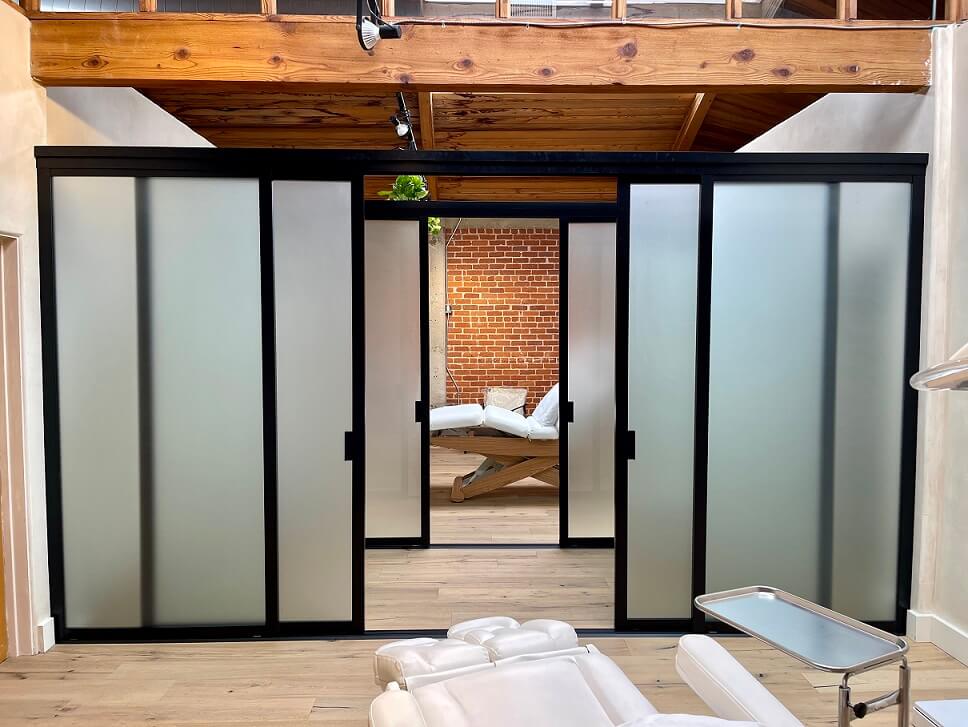
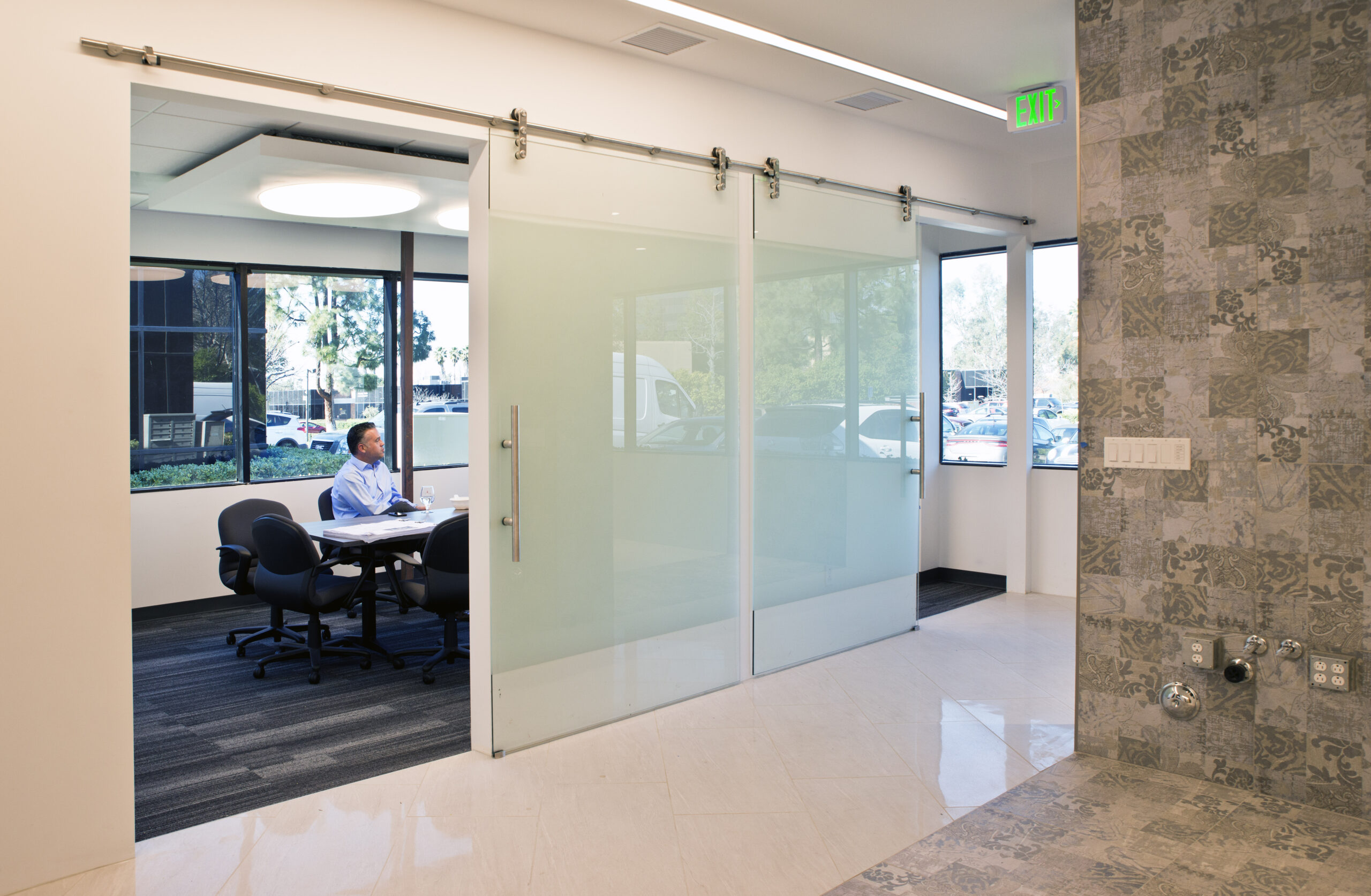
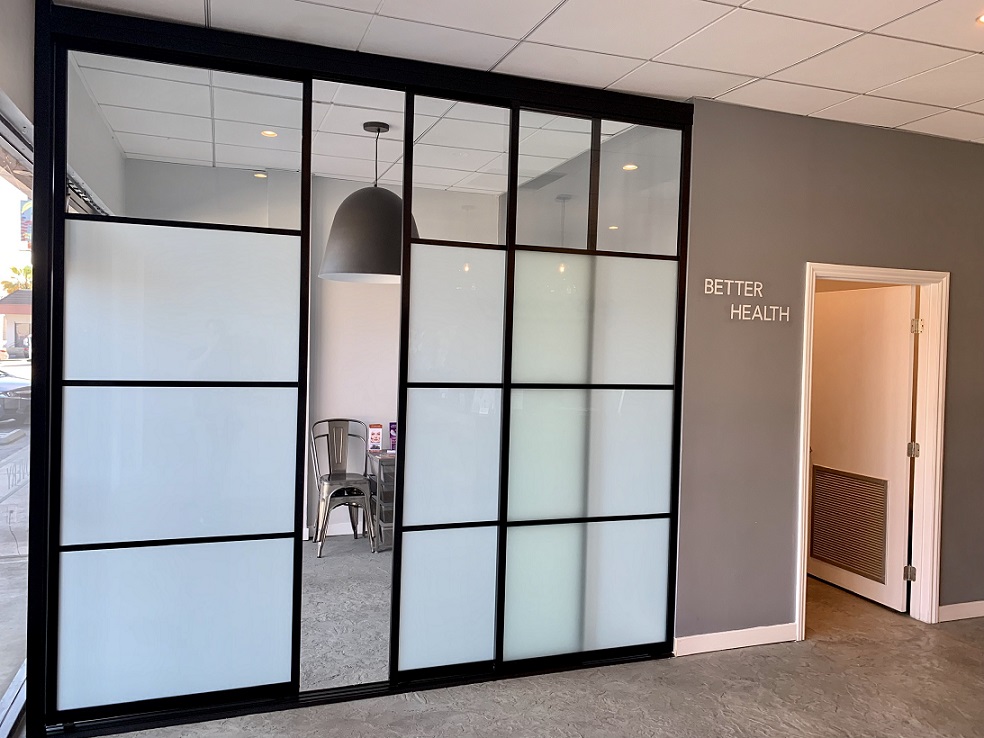
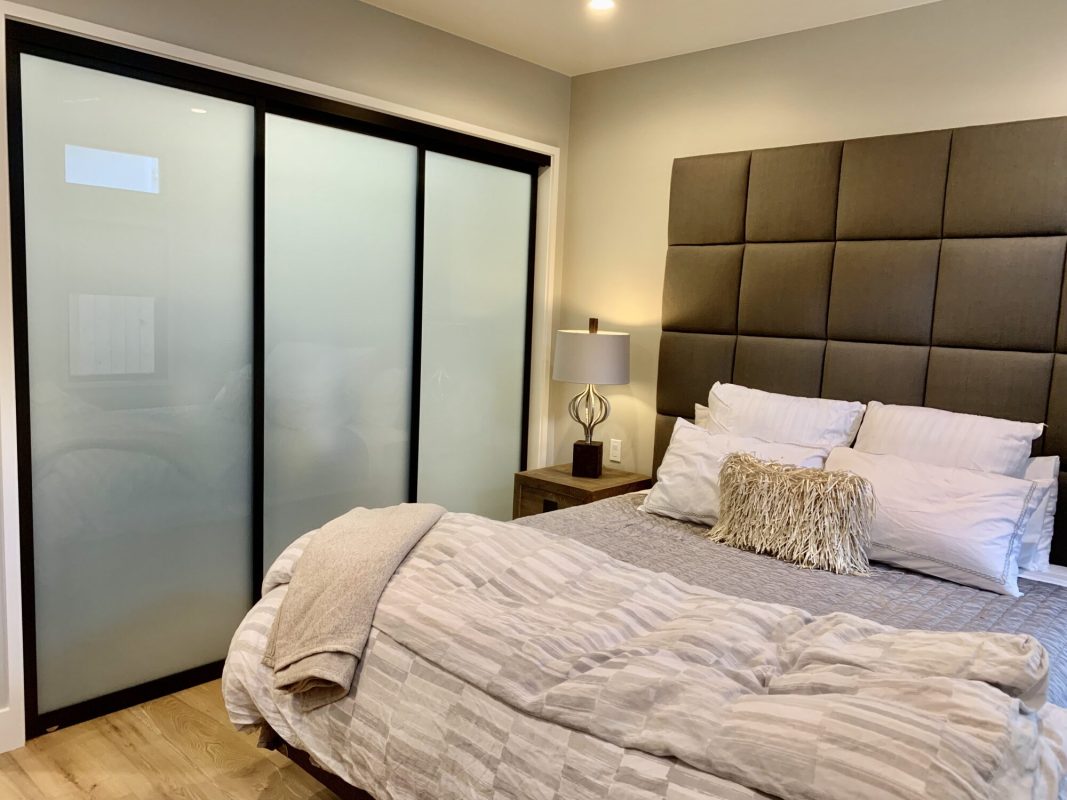
Clear or frosted panels that keep a room feeling open and bright. Frosted and laminated options hide clutter while still passing light.
Modern, light-starved, or small rooms
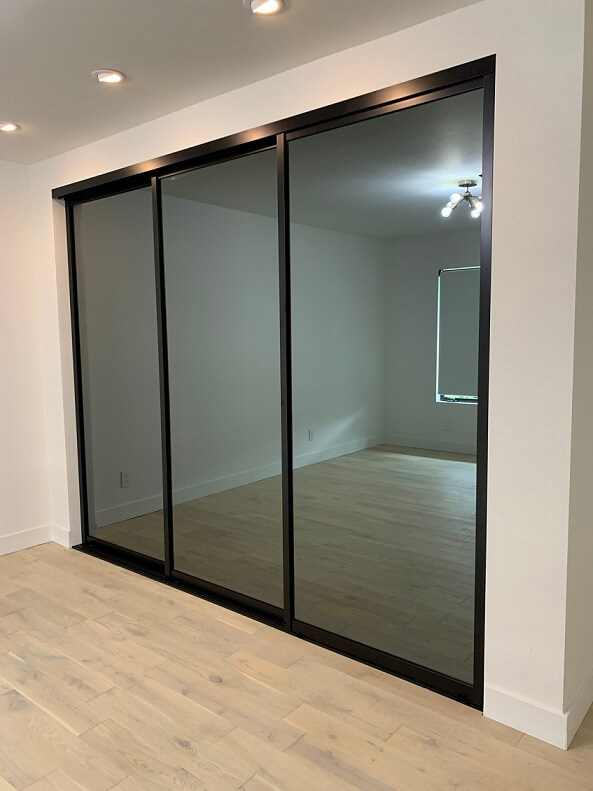
Mirrored
Do double duty as a full-length mirror. Reflective surfaces amplify daylight and make a room read noticeably larger.
Bedrooms & tight spaces that need a mirror
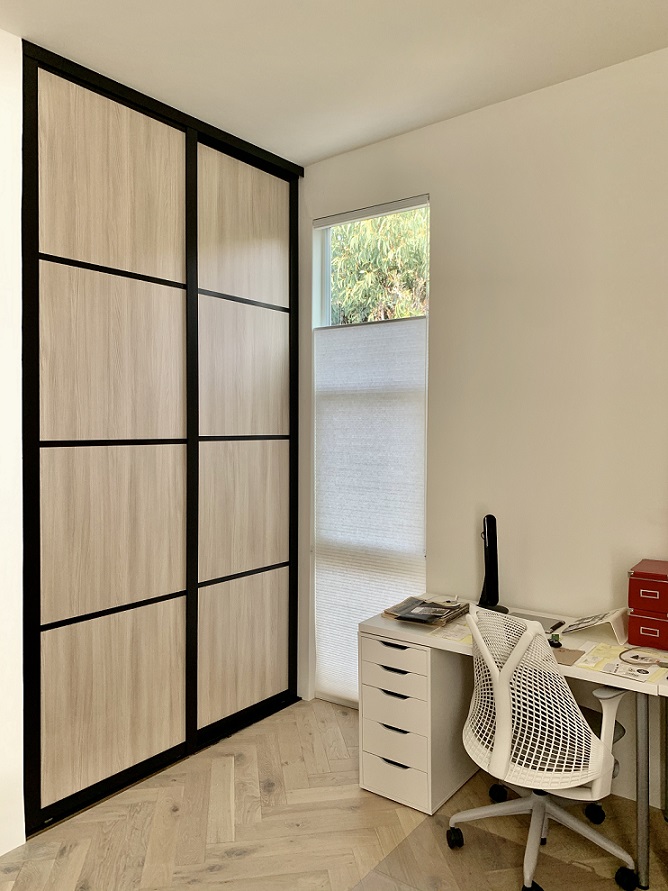
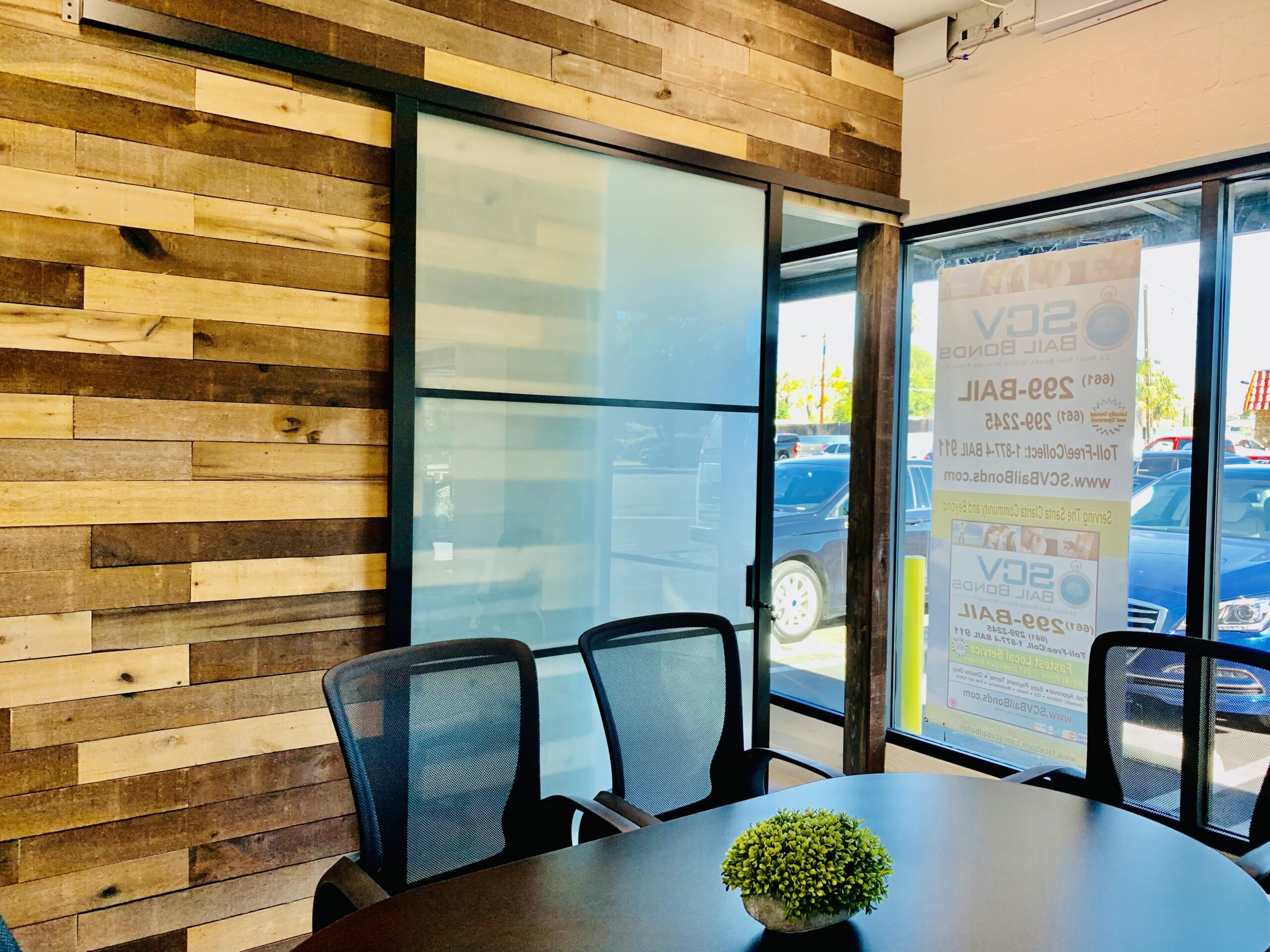
Wood
Warm, solid, and timeless. Finishes from Wenge and Walnut to Oak, Maple, and Grey Wash to match existing millwork.
Traditional, rustic & warm interiors
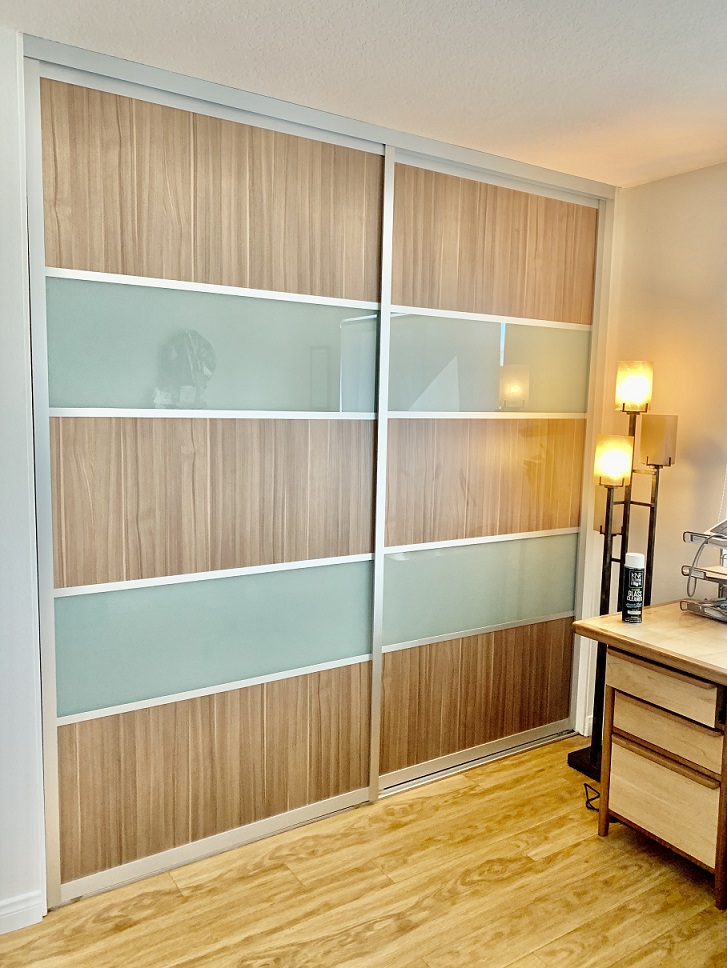
Combination
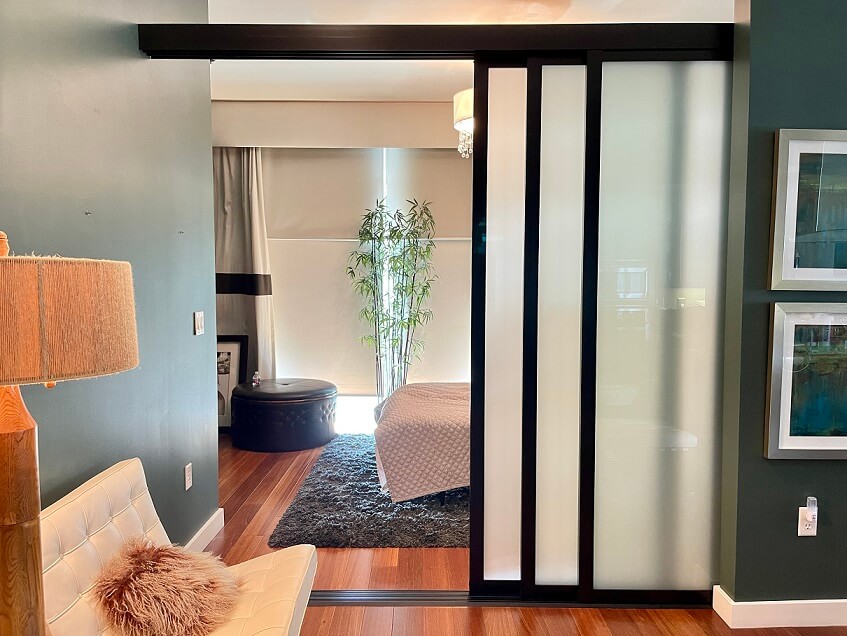
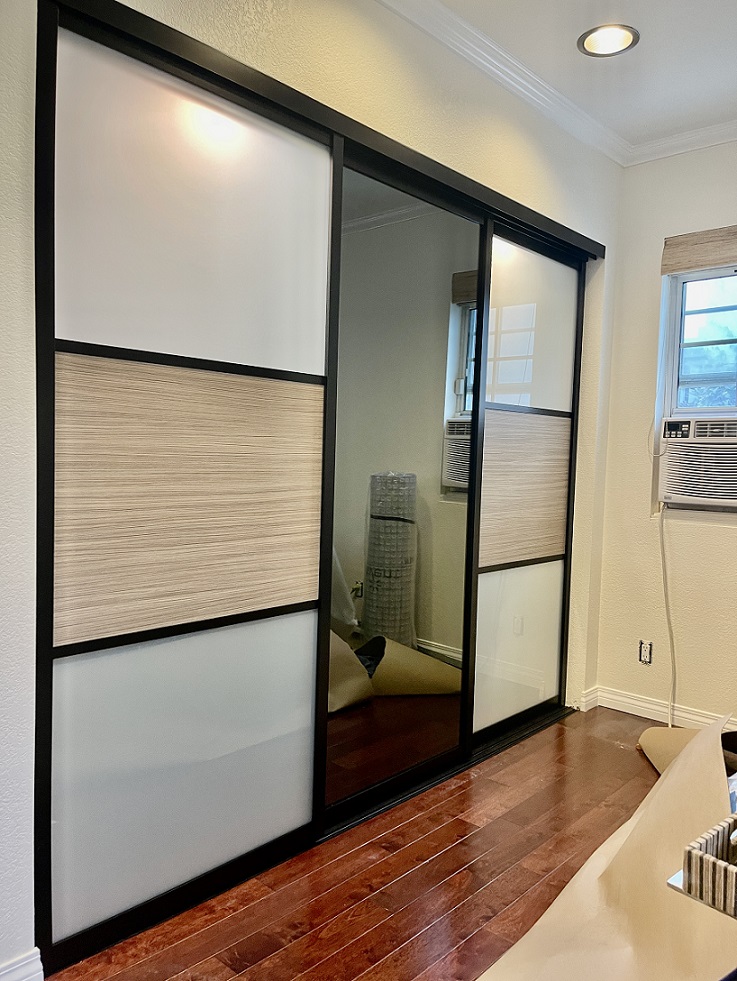
Mix wood, glass, and mirror in one custom door — the warmth of wood with the light of glass, built to your exact look.
A one-of-a-kind, fully custom design
See more finished installations in the glass closet door collection and the project gallery.
Glass vs. Mirror vs. Wood vs. Combination
A quick reference for the trade-offs that matter most when you're narrowing it down.
| Style | Light & openness | Privacy | Best rooms | Design feel |
|---|---|---|---|---|
| Clear glass | Highest — maximizes light | Low (frost to add) | Small, dark, or modern rooms | Sleek, minimal |
| Frosted glass | High — passes light, hides contents | High | Bedrooms, shared spaces | Soft, contemporary |
| Mirrored | Very high — reflects daylight | Full | Bedrooms, tight spaces | Bright, functional |
| Wood | Solid panel | Full | Traditional & warm interiors | Classic, cozy |
| Combination | Tunable — mix panels to taste | Adjustable | Custom, design-forward spaces | Bespoke, layered |
| Barn style | Depends on infill | Depends on infill | Feature walls, lofts | Bold, rustic-modern |
How to Choose the Right Closet Door
Start with the outcome you want most, then work backward to the style.
Make a room feel bigger
Reach for mirrored or clear glass. Both bounce daylight and remove the visual "wall" a solid door creates — the fastest way to open up a small bedroom.
Keep contents hidden
Choose frosted, tinted, or laminated glass, or a solid wood panel. You still get the smooth slide without putting a messy closet on display.
Save floor space
Any sliding or pocket system beats a swing door. Sliders need zero clearance in front of the closet — critical in narrow rooms and hallways.
Match a warm interior
Go wood or a framed door in Walnut, Oak, or Grey Wash. Pair the frame color to your existing trim, flooring, or cabinetry.
Make a design statement
A combination door or a black-framed Shoji/Ladder style turns the closet into a feature wall rather than something to hide.
Fit an odd opening
Wide, tall, or angled openings are where custom earns its keep — multi-panel Triple, Quattro, or L-shaped configurations fit where stock sizes can't.
Glass, Frame & Style Options
Custom means you're not stuck with one look. Here's the working palette to design from.
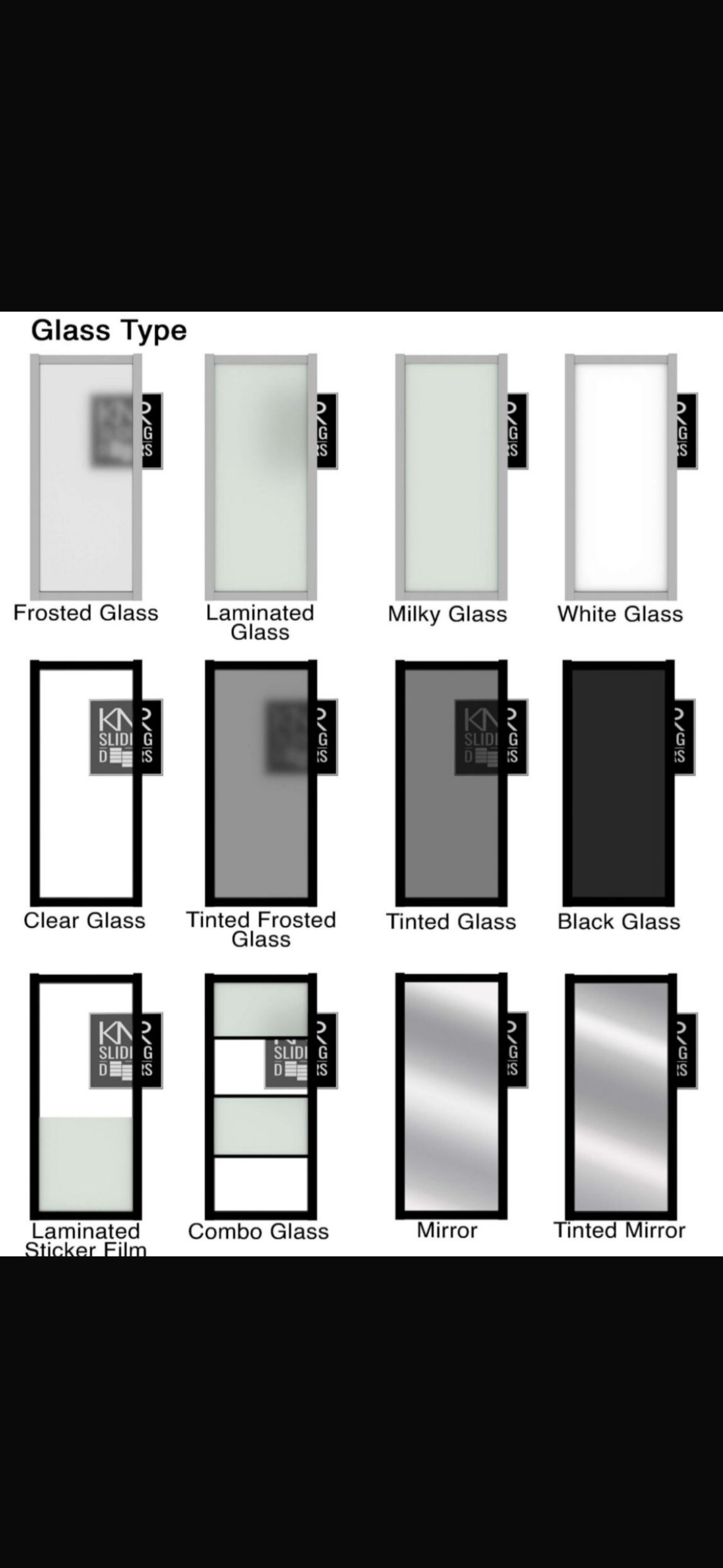
Glass options
White laminated, clear milky, tinted mirror, tinted clear, frosted, tinted frosted, mirror glass, and black glass — in 1/4″ to 1/2″ (6–12 mm) laminated or tempered.
Frame options
Aluminum frames in white, silver, and black — or a wood-framed panel. The frame color is the easiest lever for matching the door to a room's existing hardware and trim.
Door styles
Classic, Twin, Triple, Quattro, Oriental, T, Double T, Ladder, Up & Down, and Shoji layouts — the grid pattern that reads across the whole door face.
How to Measure Your Closet Opening
Accurate measurements are what separate a door that glides from one that binds. Follow these steps — or let a KNR installer measure for you.
Measure the width in three places
Measure the finished opening at the top, middle, and bottom. Use the smallest number so the door never catches.
Measure the height on both sides
Check left and right jamb to floor. Floors are rarely level — note the difference so the track can be shimmed true.
Check the depth for the track
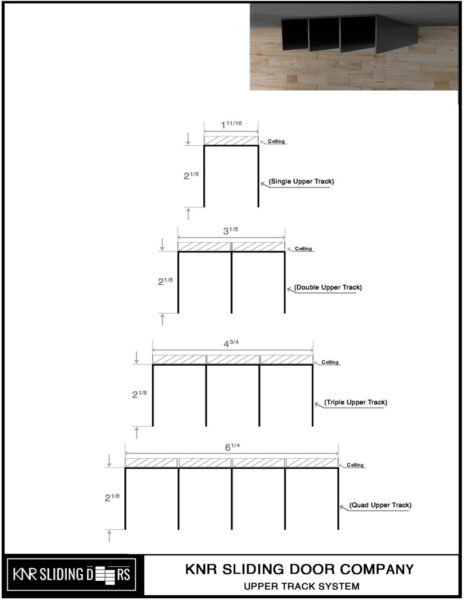
Confirm there's room at the header for the top track and enough wall beside the opening for the panels to slide clear.
Decide bypass or pocket
Bypass panels slide in front of each other; pocket doors disappear into the wall. That choice sets panel count and hardware.
Note obstructions
Baseboards, outlets, light switches, and flooring transitions all affect fit. Flag them before the door is built.
When in doubt, book a measure
For custom orders, a professional measure removes the guesswork — and it's the step most likely to save a costly re-order.
What Drives the Cost of Closet Doors
Custom closet door pricing isn't one number — it's the sum of these choices. Understanding them helps you spend where it counts.
Size & panel count
Wider openings and more panels (Triple, Quattro) use more material and hardware, raising the price.
Glass type & thickness
Laminated, tinted, and mirror glass, plus thicker 1/2″ panels, cost more than basic clear.
Frame material & finish
Specialty finishes and wood framing run above standard aluminum in white or silver.
Door style & grid
Detailed layouts like Shoji or Ladder involve more fabrication than a Classic single-pane face.
Installation & site prep
Out-of-level floors, demo of old doors, and tricky access can add labor to the install.
Configuration
Bypass, pocket, and L-shaped systems each carry different hardware and track requirements.
Every project is quoted to your exact opening. Request a free custom quote for real numbers on your space.
Built to Glide — and Stay on Track
KNR's patented center-set wheel and track system lets doors slide with the slightest push — smoothly and quietly — with the wheels positioned to keep panels from derailing. Backed by a 10-year warranty on the wheel system.
Finished Closet Door Projects
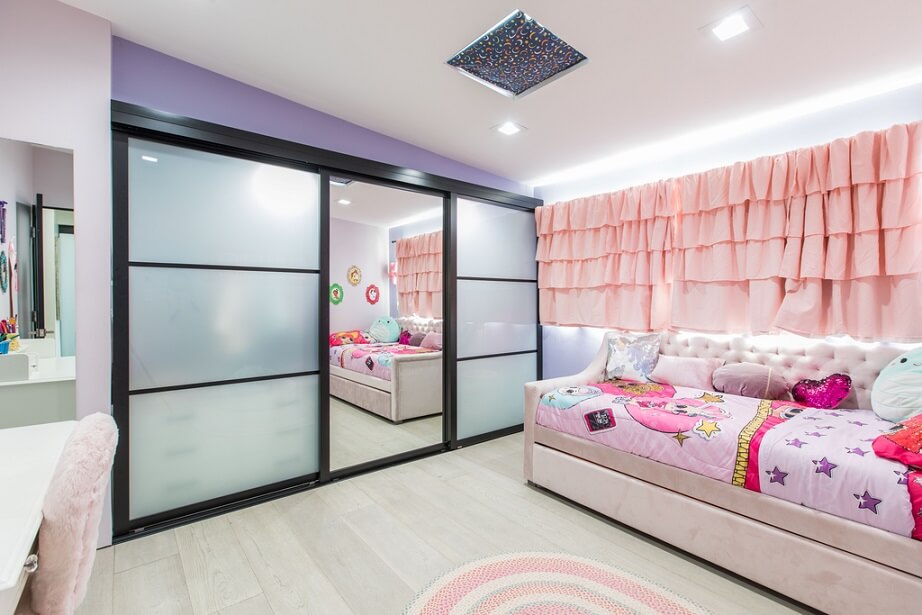
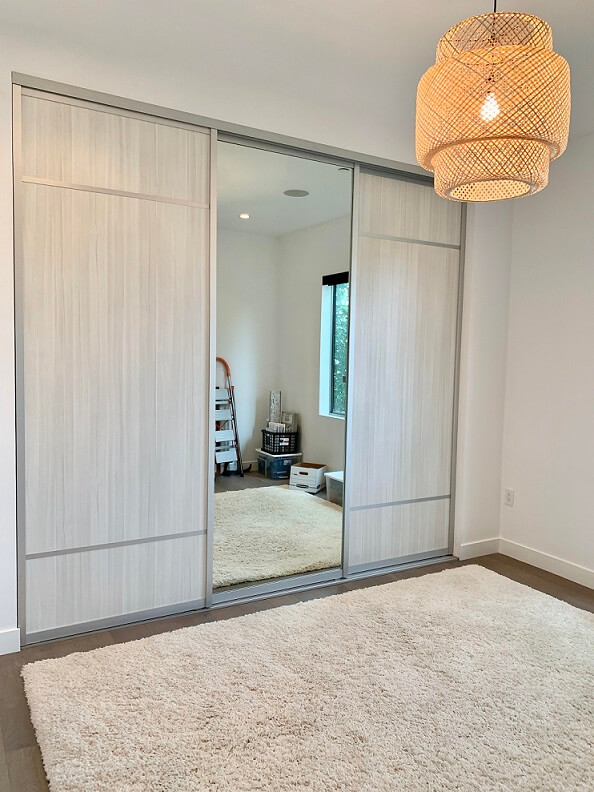
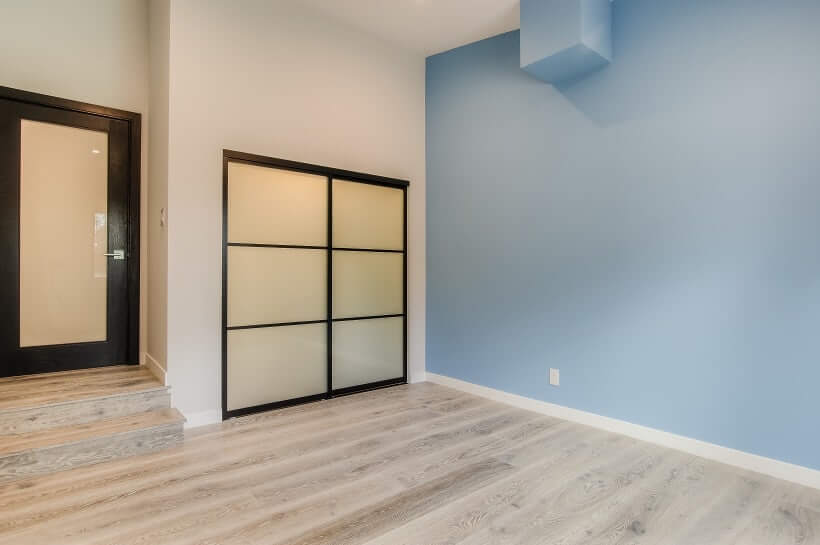
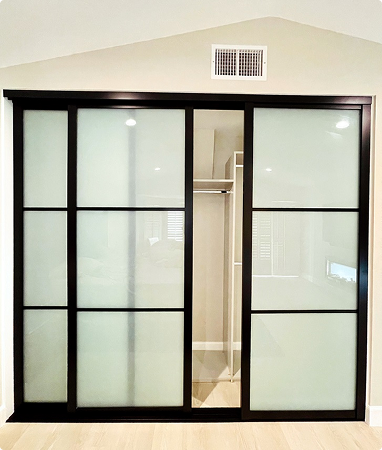
A look at custom closet doors KNR has designed and installed — glass, wood, mirror, and combination builds. Hover a photo to bring it forward.


Designed & Made in the USA
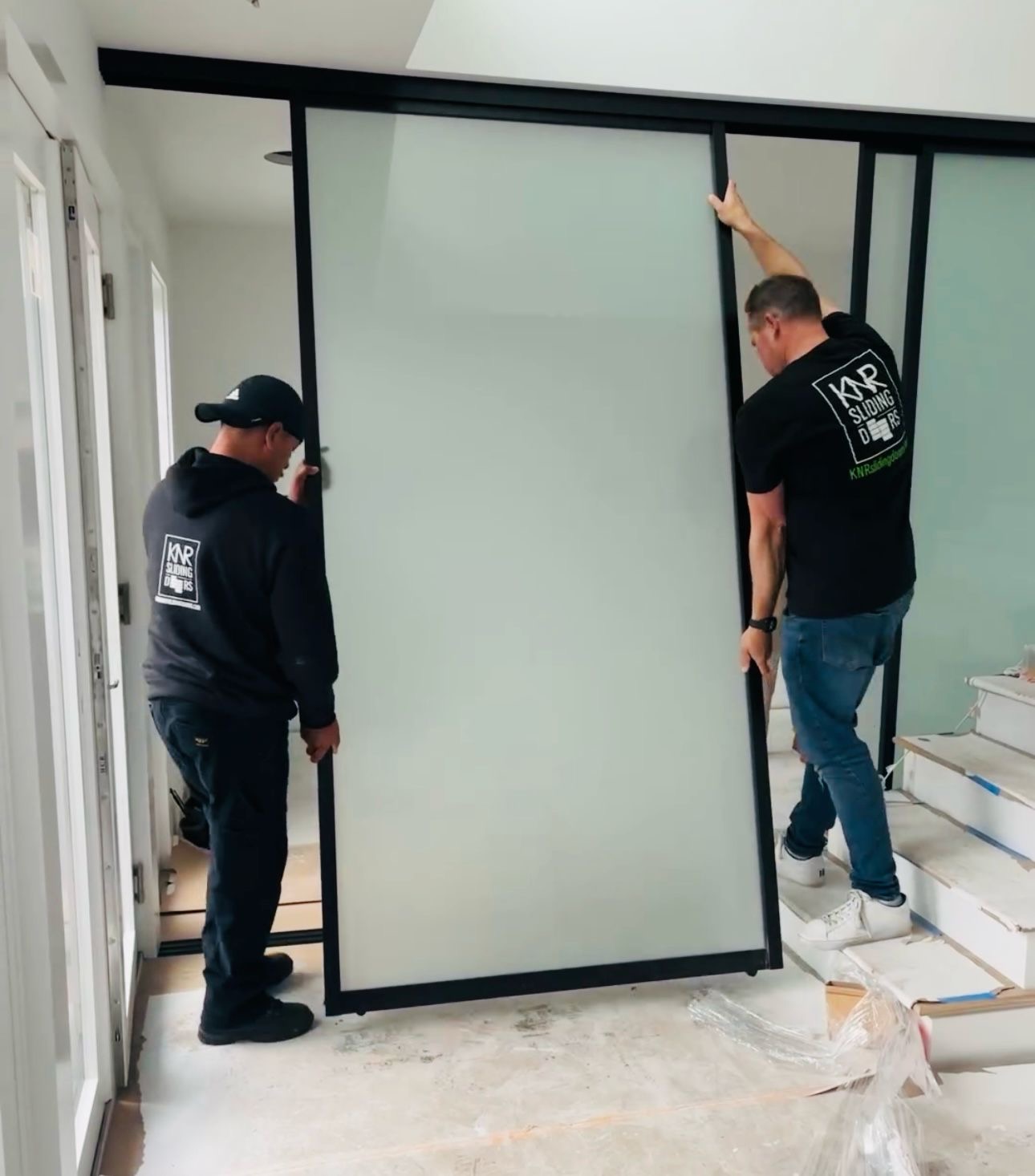
Every KNR door is engineered and built in our own Los Angeles facility — not imported and drop-shipped. That's how custom orders are ready in about 14 days, quality is checked in-house, and you deal directly with the people who make your doors.
Sliding Closet Door FAQs
What's the difference between bypass and pocket closet doors?
Are glass closet doors safe if they get bumped?
Can I get closet doors for a non-standard or extra-wide opening?
How long do custom closet doors take, and how long is installation?
Do mirrored closet doors really make a room look bigger?
Can I combine wood, glass, and mirror in one door?
What's covered by the warranty?
Related Doors & Guides
Get a Free Custom Closet Door Quote
Tell us your opening size and the look you're after. KNR builds it to fit — custom, direct from our Los Angeles workshop, in about 14 days.